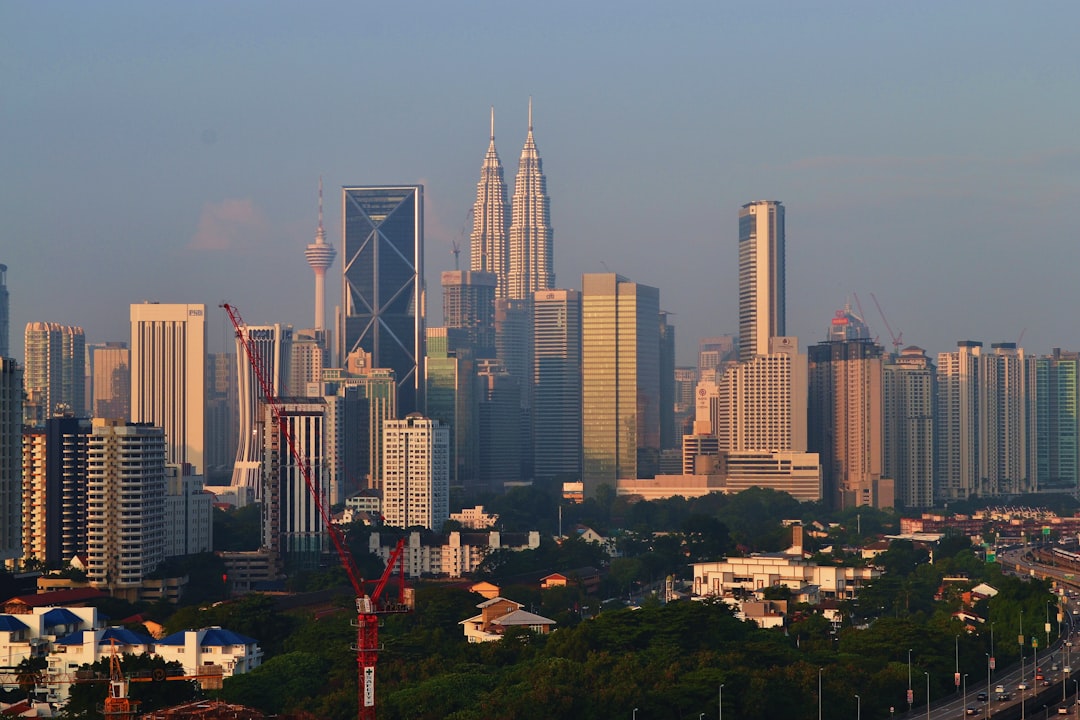
Country Market Context
Hong Kong's REIT market splits into two camps: positive income screens on one side, and very deep asset-value discounts on the other. That tension defines the dataset. As of 2026-05-06, Hong Kong ranks #6 in Finance Pulse Research's real-yield country screen, with an average nominal yield of 4.306%, inflation at 1.73%, and an average real yield of 2.532% across 33 dividend stocks. In plain terms, real yield measures nominal dividend yield after subtracting the local inflation rate, making it a cleaner gauge of purchasing-power retention than headline yield alone.
The broader equity backdrop remains active. The Hang Seng Index (^HSI) stands at 25960.91, up 0.87% on the latest reading in the dataset. That index context matters because Hong Kong combines mature income vehicles, large financials, utilities, and property-linked securities on the same exchange, creating a wide spread between low-yield and high-yield pockets.
Scale also matters. The dataset covers 33 dividend stocks and 8 REITs in Hong Kong, enough to show dispersion rather than a single market narrative. The exchange structure is especially relevant here because Hong Kong-listed income names include both locally focused landlords and China-linked issuers, so country labels alone do not capture property exposure or cash-flow geography.
This analysis focuses on three questions: where real yield clusters today, how Hong Kong REIT valuations compare with their reported net asset values, and how sector composition shapes the country screen. For readers tracking regional property income, Finance Pulse Research's Hong Kong REIT country page provides the country-level starting point, while broader comparisons sit alongside Asia REIT market coverage, dividend stock screens, real yield rankings, country breakdowns, and the research methodology.
Real Yield Landscape
Hong Kong's average real yield is 2.532%, derived from a 4.306% average nominal yield and a 1.73% inflation rate. Across 33 stocks, the distribution is broad: the median real yield is 2.713%, the 25th percentile is 1.367%, the 75th percentile is 3.804%, the standard deviation is 2.169, the minimum is -1.7%, and the maximum is 5.947%. That range is important because it shows Hong Kong is not simply a uniformly high-yield market. The upper tier clears inflation comfortably, while the lower end still loses purchasing power on the current snapshot.
The top screen is dominated by REITs, but not exclusively. Four of the top seven entries are REITs before the list broadens into finance, utilities, telecom, real estate, and energy. That mix suggests Hong Kong's income profile is not dependent on one sector alone, even if listed property vehicles occupy much of the highest-yield band.
| Ticker | Company | Sector | Nominal Yield | Inflation | Real Yield |
|---|---|---|---|---|---|
| 0435.HK | Sunlight REIT | REIT | 7.78% | 1.73% | 5.947% |
| 0808.HK | Prosperity REIT | REIT | 7.77% | 1.73% | 5.938% |
| 0405.HK | Yuexiu REIT | REIT | 7.73% | 1.73% | 5.898% |
| 3968.HK | China Merchants Bank | Finance | 7.02% | 1.73% | 5.2% |
| 0002.HK | CLP Holdings | Utilities | 6.96% | 1.73% | 5.141% |
| 0778.HK | Fortune REIT | REIT | 6.74% | 1.73% | 4.925% |
| 0823.HK | Link REIT | REIT | 6.61% | 1.73% | 4.797% |
| 0941.HK | China Mobile | Telecom | 6.01% | 1.73% | 4.208% |
| 0101.HK | Hang Lung Properties | Real Estate | 5.6% | 1.73% | 3.804% |
| 2778.HK | Champion REIT | REIT | 5.18% | 1.73% | 3.392% |
| 1398.HK | ICBC | Finance | 5.07% | 1.73% | 3.284% |
| 3988.HK | Bank of China | Finance | 5.01% | 1.73% | 3.225% |
| 0939.HK | CCB | Finance | 4.95% | 1.73% | 3.166% |
| 0386.HK | Sinopec | Energy | 4.87% | 1.73% | 3.087% |
| 0003.HK | Hong Kong & China Gas | Utilities | 4.83% | 1.73% | 3.048% |
Beyond the headline numbers, the top of the table shows a narrow spread among the first three REITs. Sunlight REIT posts a 5.947% real yield, Prosperity REIT follows at 5.938%, and Yuexiu REIT records 5.898%. The gap between first and third is small, which indicates that leadership within the highest-yield tier is tightly packed rather than defined by one runaway outlier. By contrast, the step down to the lower half of the table is more meaningful, with Champion REIT at 3.392% and Hong Kong & China Gas at 3.048%.
A different pattern emerges when non-REIT sectors enter the frame. China Merchants Bank at 5.2% real yield and CLP Holdings at 5.141% show that Hong Kong's income screen does not require direct property exposure to reach the upper range. China Mobile at 4.208% also keeps telecom relevant in the higher-yield set. In other words, the country-level average is not being held up solely by one property trade.
The data shifts when viewed through the full-country distribution. With a median real yield of 2.713% above the mean of 2.532%, Hong Kong's real-yield profile has some lower-return drag in the broader 33-stock universe. The negative minimum of -1.7% confirms that not every dividend stock compensates for inflation. Yet the upper quartile begins at 3.804%, which matches Hang Lung Properties and marks the threshold where real yield begins to look materially stronger within this screen.
Zooming into the inflation relationship, all 15 names in the table clear the 1.73% inflation rate on a nominal basis by a visible margin. That matters because the current top list is entirely in positive real territory. The strongest REITs therefore do not just offer high nominal yields; they also retain a notable spread above current inflation in the dataset.
REIT Market Analysis
Hong Kong has 8 REITs in the Finance Pulse dataset, with an average current yield of 5.513% and an average NAV discount of -64.667%. NAV premium or discount measures the gap between market price and reported net asset value per unit; negative figures indicate the market price sits below reported asset value, while positive figures indicate a premium. On this screen, every reported NAV figure is negative where data is available, and several are exceptionally deep.
Distribution Safety Score also requires unpacking. It is a 0-100 scale where higher values indicate stronger payout coverage and lower apparent distribution stress; in this country set, scores are either 0 or 25. Aristocrat status refers to a REIT classified by Finance Pulse Research for distribution consistency over time. Hong Kong has 0 aristocrats in the current REIT module.
| Ticker | Name | Sub-Sector | Yield | NAV Discount | Safety Score | Aristocrat? |
|---|---|---|---|---|---|---|
| 0435.HK | Sunlight REIT | Office | 7.78% | -67.16% | 0 | No |
| 0808.HK | Prosperity REIT | Office | 7.77% | -63.26% | 0 | No |
| 0405.HK | Yuexiu REIT | Diversified | 7.73% | -75.94% | 0 | No |
| 0778.HK | Fortune REIT | Retail | 6.74% | -59.49% | 0 | No |
| 0823.HK | Link REIT | Retail | 6.61% | -34.66% | 25 | No |
| 2778.HK | Champion REIT | Office | 5.18% | -62.04% | 0 | No |
| 1881.HK | Regal REIT | Hospitality | 2.29% | -90.12% | 25 | No |
| 1275.HK | Spring REIT | Office | data not available | data not available | 0 | No |
Stepping back to the aggregate level, the first striking point is breadth of discount rather than breadth of yield. Link REIT shows the least severe reported NAV discount at -34.66%, while Regal REIT sits at -90.12%, making the spread between the least discounted and most discounted reported entries extremely wide. The country average of -64.667% therefore reflects a market where discounts are not occasional; they are structural across the listed set.
The picture changes at the sub-sector level. Office REITs appear repeatedly: Sunlight REIT, Prosperity REIT, Champion REIT, and Spring REIT are all classified as Office, although Spring REIT has data not available for current yield, five-year average yield, NAV discount, and distribution growth. Retail appears through Fortune REIT and Link REIT, while Yuexiu REIT is Diversified and Regal REIT is Hospitality. This mix matters because the deepest discounts are not confined to one property type. Office is heavily represented, but the most severe reported discount belongs to a Hospitality name, and the least severe belongs to a Retail name.
Switching from yield to valuation, the anomaly flags require explicit attention. Sunlight REIT carries an anomaly note for an extreme NAV discount of -67.2%; Prosperity REIT carries one for -63.3%; Yuexiu REIT for -75.9%; Fortune REIT for -59.5%; Champion REIT for -62.0%; and Regal REIT for -90.1%. The dataset itself states that such extremes may reflect stale NAV data, illiquid market conditions, or structural factors. That caveat is not cosmetic. It means the valuation gap can be analytically useful, but it cannot be treated as a simple one-for-one measure of mispricing without context.
That pattern breaks down when safety scores are added. Link REIT and Regal REIT are the only names with a Distribution Safety Score of 25, while every other covered REIT records 0. Yet their yield positions are very different: Link REIT remains in the upper yield band at 6.61%, whereas Regal REIT sits much lower at 2.29%. Safety and headline yield therefore do not line up neatly in this market snapshot.
Cross-referencing with distribution history reveals another split. Yuexiu REIT shows 21 years of continuous distributions, the longest streak in the table, while Sunlight REIT, Prosperity REIT, and Champion REIT each record 19 years, and Fortune REIT records 17 years. Link REIT, Regal REIT, and Spring REIT each show 0 years on this field. Even so, long distribution histories do not prevent steep negative five-year growth rates in the current data. Yuexiu REIT's five-year distribution growth is -30.389% and carries an anomaly flag stating that the extreme decline may reflect one-time events or base effects. Regal REIT is even lower at -48.665%, also flagged as anomalous, while Prosperity REIT stands at -10.606%, Champion REIT at -14.579%, Sunlight REIT at -7.924%, Fortune REIT at -7.81%, and Link REIT at -3.054%.
Viewed through a five-year lens, current yields also sit below five-year average yields across the names with available data. Sunlight REIT shows 7.78% currently versus a 9.464% five-year average yield; Prosperity REIT 7.77% versus 10.505%; Yuexiu REIT 7.73% versus 19.38%; Fortune REIT 6.74% versus 8.63%; Link REIT 6.61% versus 7.17%; Champion REIT 5.18% versus 7.814%; and Regal REIT 2.29% versus 26.138%. Analysis indicates that the historical distribution backdrop has weakened materially for several names, which helps explain why raw yield screens alone do not capture the full stress profile in Hong Kong REITs.
Sector Distribution
Hong Kong's 33-stock dividend universe is concentrated, but not monolithic. REITs lead both in stock count and yield profile, while technology pulls the bottom end of the market lower in real terms.
| Sector | Stock Count | Avg Nominal Yield | Avg Real Yield |
|---|---|---|---|
| REIT | 7 | 6.3% | 4.493% |
| Finance | 6 | 4.913% | 3.13% |
| Real Estate | 4 | 3.05% | 1.298% |
| Technology | 4 | 0.478% | -1.231% |
| Utilities | 3 | 5.377% | 3.585% |
| Energy | 3 | 4.613% | 2.835% |
| Telecom | 2 | 5.07% | 3.284% |
| Insurance | 2 | 3.51% | 1.75% |
| Transport | 1 | 3.87% | 2.104% |
| Conglomerate | 1 | 3.4% | 1.642% |
Looking across sectors rather than individual names, REITs stand out for both scale and spread. They account for 7 of the 33 stocks and post the highest average nominal yield at 6.3% as well as the highest average real yield at 4.493%. Utilities rank next on real yield at 3.585%, ahead of telecom at 3.284% and finance at 3.13%. That ordering is notable because it places defensiveness and regulated cash-flow sectors close to the top without matching REITs outright.
In contrast, technology sits in a separate camp. Its average nominal yield is 0.478%, and its average real yield is -1.231%, making it the only sector in this table with a negative average real yield. The gap between REITs at 4.493% and technology at -1.231% captures one of the widest internal sector spreads in the Hong Kong screen.
From another angle, the data suggests Hong Kong's income market has multiple middle tiers. Energy at 2.835%, transport at 2.104%, insurance at 1.75%, conglomerate at 1.642%, and real estate at 1.298% all remain positive on average after inflation, but they sit well below the REIT and utility leaders. That dispersion means sector choice heavily influences whether a stock lands above the country average real yield of 2.532% or below it.
Foreign Flows
Foreign institutional flow data for hong_kong is not yet covered in the Finance Pulse dataset.
Data Sources and Methodology
Finance Pulse Research tracks Hong Kong dividend stocks, real-yield screens, sector-level yield dispersion, and listed REIT metrics including current yield, five-year average yield, NAV premium or discount, distribution safety scores, years of continuous distributions, and five-year distribution growth. For Hong Kong, the current dataset includes 33 dividend stocks and 8 REITs, with snapshot dates of 2026-05-06 for both the real-yield and REIT modules. The broader country file also includes the latest Hang Seng Index reading and a foreign-flow status field.
Where data is incomplete, the article marks it as data not available or not yet covered. That applies here to Spring REIT's missing yield, NAV discount, five-year average yield, and distribution growth fields, and to Hong Kong's foreign-flow file, which is currently marked as turnover-only with status no_data for 2026-05-05. Finance Pulse Research presents anomaly flags exactly where the source dataset identifies them, especially for extreme NAV discounts or unusual five-year distribution changes.
Methodology details, metric definitions, and coverage rules are available on the Finance Pulse methodology page. Additional REIT comparisons are also available through the Hong Kong REIT coverage hub and the broader country research index.
This analysis is based on publicly available market data and derived metrics calculated by Finance Pulse Research. Finance Pulse Research is a data analytics publisher. Content is for informational and educational purposes only. Nothing herein constitutes investment advice, a recommendation to buy or sell any security, or an offer of any kind. Data as of 2026-05-06.
Related Analyses
Readers comparing Hong Kong against neighboring income markets can start with the Hong Kong REIT country page for the local property screen, then broaden out to Asia-wide REIT coverage for cross-market valuation context. For stock-level income comparisons, the real yield rankings and dividend research section add broader regional context. The country analysis index provides entry points into other market deep dives built on the same methodology.