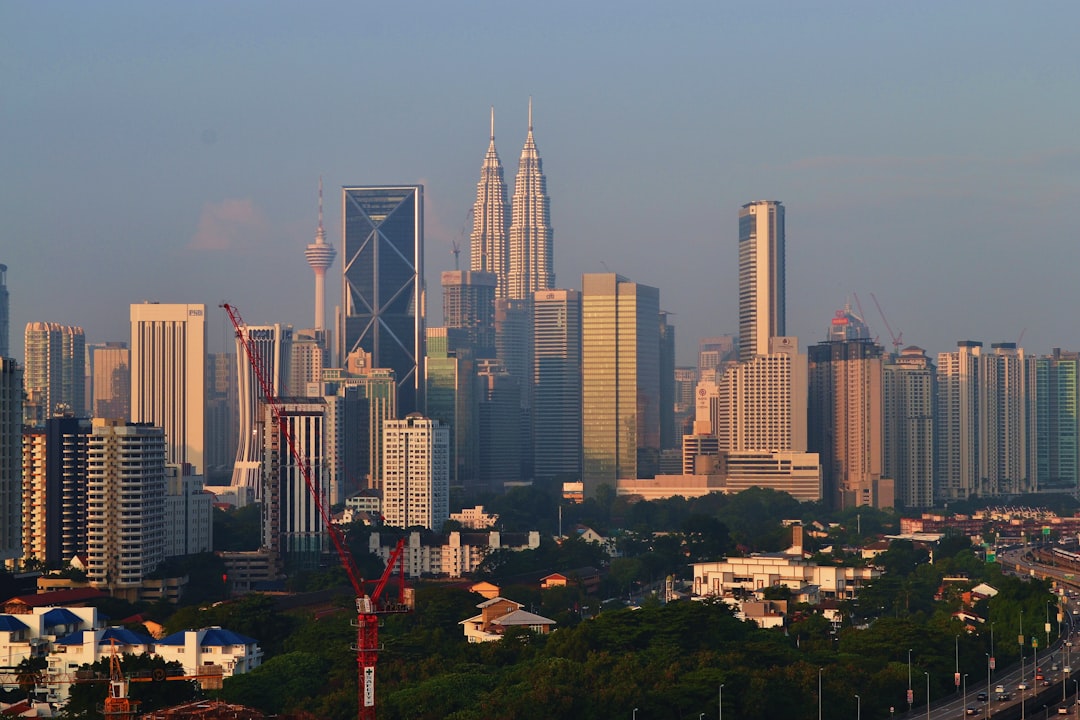
Country Market Context
Japan’s income market starts with a split result: the country ranks #7 on real yield, yet its listed REIT cohort posts an average real yield of 2.066%, far above the full-country stock average of 0.404%. That gap answers an important question for readers tracking Japan REIT market data: where is Japan’s listed income concentration actually sitting today?
As of 2026-05-06, the Nikkei 225 (^N225) stood at 59513.12, up 0.38% on the latest reading in the dataset. The country snapshot also shows 52 dividend-paying stocks covered in Finance Pulse Research’s Japan real-yield universe, with inflation running at 2.739%. Against that backdrop, the market’s average nominal yield of 3.154% compresses to an average real yield of 0.404%, meaning the aggregate income picture looks positive, but only modestly so after inflation.
Structure matters here. Japan’s covered universe includes 16 REITs, making property vehicles a meaningful share of the screened income set. In count terms alone, REITs represent 16 of 52 tracked names, and their sector averages place them at the top of the domestic yield stack in this dataset. That concentration is visible again when the highest real-yield entries are ranked: REITs dominate the upper tier.
Tokyo-listed vehicles anchor the analysis, and the scope of this article is narrow by design. It reviews the country-level real-yield backdrop, the leading income names, the full J-REIT listings in Japan, sector distribution patterns, and the current status of foreign institutional flow coverage. It does not extend into untracked securities, private real estate, or data points not yet covered in the Finance Pulse dataset.
Real Yield Landscape
Japan’s average real yield stands at 0.404%, derived from an average nominal yield of 3.154% against inflation of 2.739%. Ranked globally within the Finance Pulse country set, Japan sits at #7. The distribution is wide rather than uniform: among 52 covered stocks, the median real yield is 0.386%, the 25th percentile is -0.612%, and the 75th percentile is 1.52%. The minimum real yield in the set is -2.666%, while the maximum reaches 3.71%. That spread shows a market where inflation still erodes payout value for a meaningful share of names, even as a separate group clears inflation by a substantial margin.
The top of the ranking is heavily property-led. Of the 15 highest real-yield entries in the dataset, 12 come from the REIT sector. Only Honda Motor from Automotive and Nippon Steel from Materials break into that upper cohort. The pattern is not subtle. Income adjusted for inflation is currently concentrated in Japanese real estate vehicles rather than broadly dispersed across industrial sectors.
| Ticker | Company | Sector | Nominal Yield | Inflation | Real Yield |
|---|---|---|---|---|---|
| 3309.T | Sekisui House REIT | REIT | 6.55% | 2.739% | 3.71% |
| 8958.T | Global One Real Estate Investment | REIT | 6.47% | 2.739% | 3.632% |
| 7267.T | Honda Motor | Automotive | 5.54% | 2.739% | 2.727% |
| 8953.T | Japan Retail Fund Investment | REIT | 5.15% | 2.739% | 2.347% |
| 8972.T | KDX Realty Investment | REIT | 5.14% | 2.739% | 2.337% |
| 8964.T | Frontier Real Estate Investment | REIT | 5.10% | 2.739% | 2.299% |
| 3281.T | GLP J-REIT | REIT | 4.97% | 2.739% | 2.172% |
| 8960.T | United Urban Investment | REIT | 4.96% | 2.739% | 2.162% |
| 3295.T | Hulic REIT | REIT | 4.95% | 2.739% | 2.153% |
| 8954.T | ORIX JREIT | REIT | 4.92% | 2.739% | 2.123% |
| 8961.T | MORI TRUST Sogo REIT | REIT | 4.86% | 2.739% | 2.065% |
| 8955.T | Japan Prime Realty Investment | REIT | 4.31% | 2.739% | 1.53% |
| 3283.T | Nippon Prologis REIT | REIT | 4.30% | 2.739% | 1.52% |
| 8952.T | Japan Real Estate Investment | REIT | 4.25% | 2.739% | 1.471% |
| 5401.T | Nippon Steel | Materials | 4.20% | 2.739% | 1.423% |
Beyond the headline numbers, the tiering is informative. Two REITs stand alone above 3.6% real yield: Sekisui House REIT at 3.71% and Global One Real Estate Investment at 3.632%. A second band runs from 2.065% to 2.727%, containing one automotive name and a cluster of REITs with nominal yields from 4.86% to 5.54%. A third band between 1.423% and 1.53% still clears inflation, but by a much thinner margin.
The sector read-through is clear. Automotive contributes one standout through Honda Motor, while Materials appears with Nippon Steel. Yet neither sector matches the breadth of REIT representation. This matters because the country-level average real yield of 0.404% can understate where inflation-adjusted income is actually concentrated. The data reveals a polarized market: a large group sits near or below inflation after adjustment, while the REIT subset captures most of the stronger real-yield outcomes.
A different pattern emerges when the aggregate distribution is compared with the top table. The 75th percentile for Japan’s full stock universe is 1.52%, which means roughly a quarter of covered names reach or exceed that threshold. In the top table, Nippon Prologis REIT lands exactly at 1.52%, effectively marking that upper-quartile boundary. Above that line, REITs are the defining feature of the country’s income landscape. More broadly, the data supports using Japan REIT screens as a focused lens on where real income resilience currently appears inside the covered market.
REIT Market Analysis
Japan’s REIT module covers 16 names, with an average current yield of 4.861% and an average NAV discount of -10.095%. NAV premium/discount measures how the listed price compares with estimated net asset value; positive numbers indicate a premium to NAV, while negative numbers indicate a discount. The dataset also tracks a Distribution Safety Score, a 0-100 indicator where higher values signal stronger payout coverage. Aristocrat status identifies REITs with long continuous distribution records in the Finance Pulse framework, and Japan has 3 such names in the current country set.
| Ticker | Name | Sub-Sector | Yield | NAV Discount | Safety Score | Aristocrat? |
|---|---|---|---|---|---|---|
| 3309.T | Sekisui House REIT | Residential | 6.55% | 26.87% | 25 | No |
| 8958.T | Global One Real Estate Investment | Office | 6.47% | 20.63% | 0 | No |
| 8953.T | Japan Retail Fund Investment | Retail | 5.15% | -30.62% | 0 | Yes |
| 8972.T | KDX Realty Investment | Office | 5.14% | -69.75% | 0 | No |
| 8964.T | Frontier Real Estate Investment | Retail | 5.10% | 32.99% | 0 | No |
| 3281.T | GLP J-REIT | Logistics | 4.97% | 43.76% | 0 | No |
| 8960.T | United Urban Investment | Diversified | 4.96% | 49.41% | 0 | No |
| 3295.T | Hulic REIT | Office | 4.95% | 19.2% | 0 | No |
| 8954.T | ORIX JREIT | Diversified | 4.92% | -21.84% | 0 | No |
| 8961.T | MORI TRUST Sogo REIT | Office | 4.86% | -38.11% | 25 | No |
| 8955.T | Japan Prime Realty Investment | Office | 4.31% | -63.15% | 25 | No |
| 3283.T | Nippon Prologis REIT | Logistics | 4.30% | 50.5% | 0 | No |
| 8952.T | Japan Real Estate Investment | Office | 4.25% | -68.09% | 0 | Yes |
| 8984.T | Daiwa House REIT Investment | Logistics | 4.14% | -43.99% | 0 | No |
| 3269.T | Advance Residence (REIT) | Residential | 3.96% | -3.46% | 0 | Yes |
| 8951.T | Nippon Building Fund (REIT) | Office | 3.75% | -65.87% | 0 | No |
Zooming into the individual entries, the yield range runs from 3.75% to 6.55%. The upper end is led by residential and office exposure, while the lower end still remains close to 4% except for one office entry at 3.75%. Relative to the country inflation rate of 2.739%, every REIT in the table maintains a positive nominal spread, though real-yield outcomes differ and were already reflected in the earlier country ranking.
The valuation picture is more fractured than the yield picture. Six vehicles trade at premiums to NAV: Sekisui House REIT at 26.87%, Global One Real Estate Investment at 20.63%, Frontier Real Estate Investment at 32.99%, GLP J-REIT at 43.76%, United Urban Investment at 49.41%, Hulic REIT at 19.2%, and Nippon Prologis REIT at 50.5%. The rest trade at discounts, ranging from the near-flat -3.46% for Advance Residence (REIT) to discounts deeper than -60% for several office-linked names.
That pattern breaks down when the anomaly annotations are added. KDX Realty Investment carries an _anomaly_nav note for an extreme NAV discount of -69.8% in rounded form, Japan Prime Realty Investment carries an _anomaly_nav note for an extreme NAV discount of -63.1%, Japan Real Estate Investment carries an _anomaly_nav note for an extreme NAV discount of -68.1%, Nippon Building Fund (REIT) carries an _anomaly_nav note for an extreme NAV discount of -65.9%, and Nippon Prologis REIT carries an _anomaly_nav note for an extreme NAV premium of 50.5%. The dataset explicitly notes that such extremes may reflect stale NAV data, illiquid market conditions, or structural factors. As a result, those values merit caution in interpretation rather than face-value treatment.
Cross-referencing with safety metrics reveals a sparse distribution. Only three names post a Distribution Safety Score of 25: Sekisui House REIT, MORI TRUST Sogo REIT, and Japan Prime Realty Investment. The remaining 13 names show 0 on this scale. That does not automatically translate into identical risk outcomes across all entries; it simply indicates that, within the Finance Pulse scoring framework, payout coverage signals are limited or not yet strong for most of the covered Japanese REIT sample.
Viewed through continuity and growth, the aristocrat subset adds another layer. Japan Retail Fund Investment, Japan Real Estate Investment, and Advance Residence (REIT) make up the country’s 3 aristocrats. Their continuous distribution records stand at 21, 21, and 16 years respectively. Distribution growth over five years measures the percentage change in distributions over that period, and the values here are 5.541 for Japan Retail Fund Investment, 2.459 for Japan Real Estate Investment, and 2.387 for Advance Residence (REIT). Notably, those three do not cluster on valuation: one sits near NAV at -3.46%, while two trade at materially wider discounts.
Stepping back to the aggregate level, sub-sector mix also matters. Office is the largest sub-sector in this table, spanning Global One Real Estate Investment, KDX Realty Investment, Hulic REIT, MORI TRUST Sogo REIT, Japan Prime Realty Investment, Japan Real Estate Investment, and Nippon Building Fund (REIT). Logistics includes GLP J-REIT, Nippon Prologis REIT, and Daiwa House REIT Investment. Residential includes Sekisui House REIT and Advance Residence (REIT). Retail includes Japan Retail Fund Investment and Frontier Real Estate Investment. Diversified includes United Urban Investment and ORIX JREIT. The concentration in office helps explain why the NAV picture looks especially dispersed: several of the largest discounts sit in that single sub-sector, while premiums appear more often in logistics and selected diversified or retail names. Readers comparing these patterns can use the full Japan REIT coverage page for the broader country list context.
Sector Distribution
The sector table confirms that Japan’s income market is not balanced evenly across industries. REITs combine the highest stock count and the strongest average real yield, while several growth-oriented or lower-yield sectors remain below inflation on average.
| Sector | Stock Count | Avg Nominal Yield | Avg Real Yield |
|---|---|---|---|
| REIT | 16 | 4.861% | 2.066% |
| Trading | 5 | 2.13% | -0.592% |
| Telecom | 3 | 3.51% | 0.751% |
| Pharma | 3 | 3.473% | 0.715% |
| Finance | 3 | 2.593% | -0.141% |
| Technology | 3 | 0.573% | -2.108% |
| Automotive | 2 | 4.355% | 1.573% |
| Materials | 2 | 3.06% | 0.313% |
| Electronics | 2 | 2.67% | -0.067% |
| Utilities | 2 | 1.665% | -1.045% |
| Insurance | 2 | 2.985% | 0.24% |
| Transport | 2 | 1.58% | -1.127% |
| Retail | 1 | 3.13% | 0.381% |
| Energy | 1 | 2.57% | -0.164% |
| Entertainment | 1 | 2.38% | -0.349% |
| Semiconductors | 1 | 1.52% | -1.186% |
| Conglomerate | 1 | 1.17% | -1.527% |
| Electrical | 1 | 0.99% | -1.702% |
| Leisure | 1 | 0.72% | -1.965% |
The picture changes at the sector level. REITs lead both in scale and income efficiency, with 16 stocks and an average real yield of 2.066%. Automotive follows at 1.573%, though that sector includes only 2 names. Telecom and Pharma remain positive at 0.751% and 0.715%, suggesting that income resilience is not limited exclusively to property, but the gap versus REITs remains wide.
On the other side of the ledger, Technology records the weakest average real yield at -2.108%, followed by Leisure at -1.965% and Electrical at -1.702%. These figures indicate that inflation consumes a large share of nominal payouts in those sectors. Trading, Finance, Electronics, Energy, and Entertainment also remain below zero on average. The implication is structural rather than temporary within this snapshot: positive nominal dividends do not automatically translate into positive real income once inflation is deducted.
Switching from yield to breadth, the sector count distribution also matters. Single-stock sectors such as Retail, Energy, Entertainment, Semiconductors, Conglomerate, Electrical, and Leisure are present in the dataset but do not define the country’s aggregate outcome. Instead, REITs, Trading, and the groups with 2 or 3 names shape most of the observable pattern. That is why Japan J-REIT analysis carries disproportionate weight in the national income profile despite REITs being only one sector classification among many.
Foreign Flows
Foreign institutional flow data for japan is not yet covered in the Finance Pulse dataset.
Data Sources and Methodology
Finance Pulse Research tracks Japan across several modules in this article: country metadata, a benchmark index snapshot, stock-level nominal and real yields, sector averages, and REIT-specific valuation and payout fields. For Japan, the benchmark snapshot in this dataset is the Nikkei 225, while the real-yield module covers 52 stocks and the REIT module covers 16 names. Where available, REIT fields include sub-sector, current yield, five-year average yield, NAV premium or discount, continuous distribution years, five-year distribution growth, aristocrat status, and Distribution Safety Score.
Data freshness is explicit in the source block. The real-yield snapshot date is 2026-05-06, the REIT snapshot date is 2026-05-06, and the dataset fetched_at timestamp is 2026-05-06. Foreign flow coverage exists in a weekly-section tier for Japan, but the current status is no_data and the net local flow figure is data not available for the 2026-04-30 trade date.
What is missing? Some markets and fields remain not yet covered, and anomaly flags indicate where values may be affected by stale NAV inputs, illiquid trading, or structural factors. Methodology details for ranking, inflation adjustment, and derived metrics are available via the Finance Pulse REIT methodology pages and linked country modules.
This analysis is based on publicly available market data and derived metrics calculated by Finance Pulse Research. Finance Pulse Research is a data analytics publisher. Content is for informational and educational purposes only. Nothing herein constitutes investment advice, a recommendation to buy or sell any security, or an offer of any kind. Data as of 2026-05-06.
Related Analyses
Readers looking to extend this country review can start with the main Japan REIT database, which centralizes the covered J-REIT list. The same country page also provides a useful reference point for comparing sub-sector mixes inside Japan property vehicles. For a narrower valuation view, the Japan REIT market data page remains the closest internal companion to this article. Finally, the broader J-REIT listings in Japan hub offers a compact way to cross-check names mentioned above.