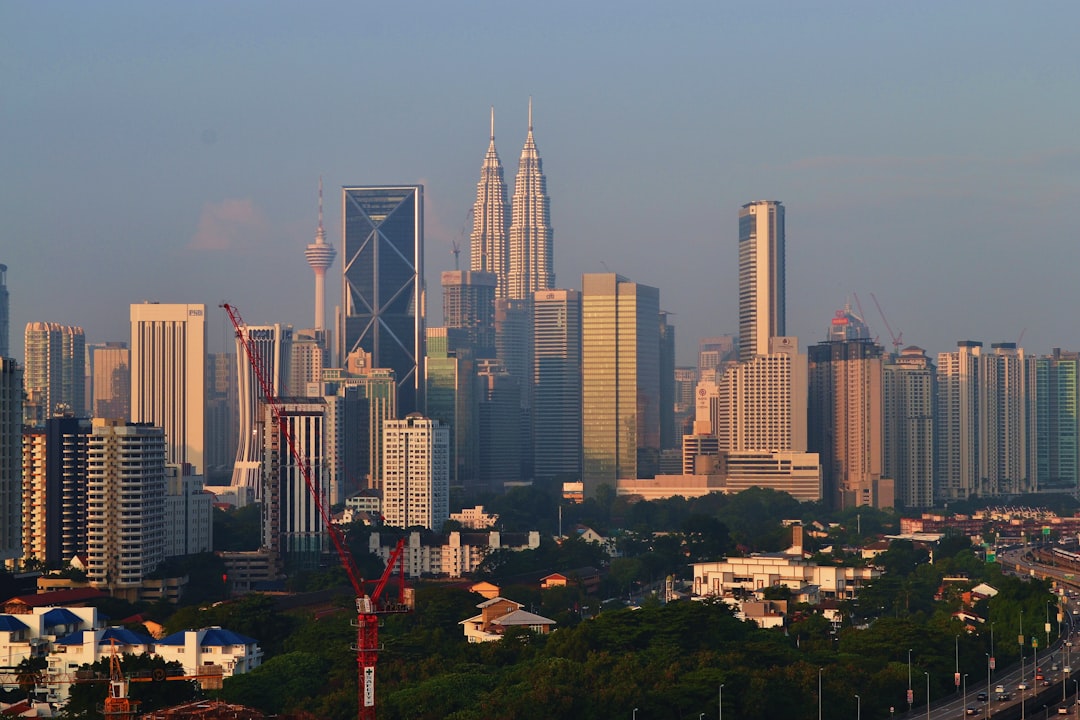
Country Market Context
Thirty-three dividend stocks, 8 REITs, and a real-yield rank of 6. That is a broader income spread than many headline discussions around Hong Kong equities imply. As of 2026-04-29, Hong Kong’s market snapshot combines a Hang Seng Index level of 26018.21 with a daily change of 1.32%, while the country-level dividend dataset shows an average nominal yield of 4.341% against inflation of 1.73%, leaving an average real yield of 2.567%.
That matters because real yield strips out inflation and shows how much dividend income remains after consumer-price pressure. In this dataset, Hong Kong ranks 6 by average real yield, based on 33 stocks. The distribution also spans a wide range, from a minimum real yield of -1.7% to a maximum of 6.203%, indicating that the local market is not a single income story but a split between strong cash-yielding names and segments where inflation still erodes payout value.
The structure also leans heavily toward listed property and financial income streams. REITs appear prominently in the country screens, and sector data shows meaningful representation from finance, utilities, energy, telecom, and real estate alongside lower-yield technology entries. Readers tracking the broader Hong Kong setup can also compare this country view with the wider Hong Kong market page, the country’s real yield profile, the broader real yield database, and the dedicated Hong Kong REIT coverage.
This article focuses on what the current data says about the Hang Seng Index backdrop, Hong Kong’s real-yield hierarchy, REIT valuation signals, sector distribution, and the present limits of foreign-flow coverage.
Real Yield Landscape
Hong Kong’s average real yield stands at 2.567% as of 2026-04-29, derived from an average nominal yield of 4.341% and inflation of 1.73%. Real yield measures dividend yield after subtracting inflation, giving a cleaner view of income purchasing power than nominal payout data alone. Ranked 6 at the country level, Hong Kong sits in the upper part of the tracked market set in this dataset, and the internal spread is notable: the median real yield is 2.713%, the 25th percentile is 1.445%, and the 75th percentile is 3.991%. That gap points to a market where top-yielding names pull meaningfully ahead of the middle.
A closer look at the leading entries confirms that point.
| Ticker | Company | Sector | Nominal Yield | Inflation | Real Yield |
|---|---|---|---|---|---|
| 0808.HK | Prosperity REIT | REIT | 8.04% | 1.73% | 6.203% |
| 0435.HK | Sunlight REIT | REIT | 7.95% | 1.73% | 6.115% |
| 0405.HK | Yuexiu REIT | REIT | 7.84% | 1.73% | 6.006% |
| 0778.HK | Fortune REIT | REIT | 6.98% | 1.73% | 5.161% |
| 0002.HK | CLP Holdings | Utilities | 6.94% | 1.73% | 5.122% |
| 0823.HK | Link REIT | REIT | 6.78% | 1.73% | 4.964% |
| 3968.HK | China Merchants Bank | Finance | 6.6% | 1.73% | 4.787% |
| 0941.HK | China Mobile | Telecom | 5.95% | 1.73% | 4.149% |
| 0101.HK | Hang Lung Properties | Real Estate | 5.79% | 1.73% | 3.991% |
| 2778.HK | Champion REIT | REIT | 5.33% | 1.73% | 3.539% |
| 2318.HK | Ping An Insurance | Insurance | 5.04% | 1.73% | 3.254% |
| 3988.HK | Bank of China | Finance | 4.94% | 1.73% | 3.156% |
| 0939.HK | CCB | Finance | 4.89% | 1.73% | 3.107% |
| 0386.HK | Sinopec | Energy | 4.88% | 1.73% | 3.097% |
| 1398.HK | ICBC | Finance | 4.83% | 1.73% | 3.048% |
Beyond the headline rankings, the composition is the more revealing point. REITs take 6 of the 10 highest real-yield slots in the table, and the top 4 positions all come from that one segment. Utilities and telecom add defensive-looking cash distributions to the upper tier, while finance contributes depth rather than outright leadership. That clustering matters for anyone reading the hang seng index through an income lens: high real yield exists, but it is concentrated rather than evenly distributed.
A different pattern emerges when the table is viewed by threshold. Five names clear a real yield above 5%, and four of those five are REITs. The next band, roughly from 3% to below 5%, is more diversified, including finance, telecom, real estate, insurance, energy, and another REIT. In other words, the very top of Hong Kong’s real-yield ladder is property-heavy, while the broader middle contains a more balanced mix of sectors.
The data shifts when viewed through dispersion. With a maximum real yield of 6.203% and a country average of 2.567%, the top end sits far above the market mean. At the same time, the minimum of -1.7% and a standard deviation of 2.188 show that lower-yield or inflation-lagging names remain part of the local landscape. This is not a market where one average captures the whole picture.
Switching from simple ranking to market interpretation, the income profile around Hong Kong appears stronger in established cash-generating sectors and weaker in growth-oriented groups. The table’s absence of technology names is therefore informative. Technology exists in the country dataset, but not in the leading real-yield list. That gap aligns with the sector breakdown later in this article and reinforces the bifurcation between income-oriented listings and lower-yield growth exposures.
For readers comparing country screens, the most useful takeaway is not merely that Hong Kong ranks 6. It is that inflation-adjusted income remains present at scale, yet heavily shaped by listed property vehicles and selected financial franchises, with broad variation beneath the top layer. More detail on country-level calculations is also available in Finance Pulse’s real yield coverage and dedicated Hong Kong real-yield page.
REIT Market Analysis
Hong Kong’s REIT module currently covers 8 listings, with an average yield of 5.659% and an average NAV discount of -65.29%. NAV premium or discount measures how far a REIT’s market price trades above or below its reported net asset value; negative figures indicate a discount, while positive figures indicate a premium. Distribution Safety Score measures payout coverage strength on a 0-100 scale, where higher values indicate stronger support for distributions based on the model used in the dataset. Aristocrat status tracks sustained distribution growth streaks, and Hong Kong currently has 0 REIT aristocrats in coverage.
| Ticker | Name | Sub-Sector | Yield | NAV Discount | Safety Score | Aristocrat? |
|---|---|---|---|---|---|---|
| 0808.HK | Prosperity REIT | Office | 8.04% | -64.02% | 0 | No |
| 0435.HK | Sunlight REIT | Office | 7.95% | -67.44% | 0 | No |
| 0405.HK | Yuexiu REIT | Diversified | 7.84% | -76.27% | 0 | No |
| 0778.HK | Fortune REIT | Retail | 6.98% | -60.23% | 0 | No |
| 0823.HK | Link REIT | Retail | 6.78% | -36.03% | 25 | No |
| 2778.HK | Champion REIT | Office | 5.33% | -62.66% | 0 | No |
| 1881.HK | Regal REIT | Hospitality | 2.35% | -90.38% | 25 | No |
| 1275.HK | Spring REIT | Office | data not available | data not available | 0 | No |
Zooming into the individual entries, the dominant feature is not simply yield. It is the sheer depth of discounts to asset value. Seven covered REITs with available NAV data all trade below reported NAV, and most of those discounts are extreme. Link REIT stands out as the least discounted at -36.03%, while Regal REIT screens as the deepest discount at -90.38%. The country average of -65.29% therefore reflects a market that prices Hong Kong REITs far below book asset estimates across most sub-sectors.
That pattern breaks down when anomaly flags are considered. Prosperity REIT, Sunlight REIT, Yuexiu REIT, Fortune REIT, Champion REIT, and Regal REIT all carry _anomaly_nav annotations stating that their extreme NAV discounts may reflect stale NAV data, illiquid markets, or structural factors. Those flags matter. Analysis cannot present the raw discount figures as straightforward valuation signals without acknowledging that the underlying NAV comparison may be distorted. In practical terms, the discounts show severe market dislocation relative to reported asset values, but the annotations indicate that data lag or methodology effects may be part of the story.
Cross-referencing with safety metrics reveals another split. Most Hong Kong REITs score 0 on the Distribution Safety Score scale, while Link REIT and Regal REIT score 25. A score of 25 is still low rather than strong, but it does place those two above the zero-score group. Even so, the market does not assign similar asset-value treatment to them: one trades at -36.03% and the other at -90.38%. That divergence suggests that sub-sector exposure and market confidence differ markedly, even among names with the same safety score.
Viewed through a five-year lens, current yields often sit below historical averages, not above them. Prosperity REIT shows a current yield of 8.04% versus a 5-year average yield of 10.604%. Sunlight REIT is at 7.95% against 9.425%, Fortune REIT at 6.98% against 8.684%, Link REIT at 6.78% against 7.291%, and Champion REIT at 5.33% against 7.905%. Regal REIT’s gap is the largest in proportional terms, with 2.35% current yield compared with a 5-year average yield of 26.494%. Those differences indicate that present payouts and trailing yield history diverge substantially across the market.
The picture changes further when distribution growth is added. Distribution growth over 5 years measures the cumulative change in distributions per unit over that period; negative readings mean payouts have declined rather than expanded. Every Hong Kong REIT with available data shows negative 5-year distribution growth. The contraction runs from -3.054% for Link REIT to -48.665% for Regal REIT. Yuexiu REIT, at -30.389%, and Regal REIT, at -48.665%, also carry _anomaly_growth annotations, signaling that these extreme declines may reflect one-time events or base effects. That makes the absence of aristocrats unsurprising: no covered Hong Kong REIT currently meets the sustained-growth condition embedded in aristocrat classification.
Stepping from valuation to market structure, office and retail dominate the list. Office appears in Prosperity REIT, Sunlight REIT, Champion REIT, and Spring REIT, while retail appears in Fortune REIT and Link REIT. The remaining exposures are diversified and hospitality. Geographic focus is also mixed rather than uniform: several entries are Hong-Kong-focused, two are China-focused, and Link REIT is labeled Pan-Asian. Spring REIT remains the outlier because current yield, 5-year average yield, NAV discount, and 5-year distribution growth are all data not available. Its presence expands count coverage to 8, but the analytical weight rests on the 7 names with populated market fields.
Taken together, the Hong Kong REIT dataset describes a market with high headline yields, compressed or negative distribution growth, no aristocrats, mostly low safety readings, and unusually deep discounts that come with explicit anomaly warnings. For broader context, readers can compare the country list with the full Hong Kong REIT page and the wider Hong Kong market coverage.
Sector Distribution
Sector allocation adds another layer to the Hang Seng income picture because it shows how much of the country’s real-yield profile is concentrated in a handful of segments rather than spread evenly across the market.
| Sector | Stock Count | Avg Nominal Yield | Avg Real Yield |
|---|---|---|---|
| REIT | 7 | 6.467% | 4.657% |
| Finance | 6 | 4.772% | 2.99% |
| Real Estate | 4 | 3.175% | 1.421% |
| Technology | 4 | 0.483% | -1.226% |
| Utilities | 3 | 5.35% | 3.559% |
| Energy | 3 | 4.597% | 2.818% |
| Telecom | 2 | 5.045% | 3.259% |
| Insurance | 2 | 3.68% | 1.917% |
| Transport | 1 | 3.85% | 2.084% |
| Conglomerate | 1 | 3.57% | 1.809% |
The first takeaway is scale. REITs and finance account for 13 of the 33 stocks in the dataset, making them the largest combined block. Yet they are not equal in income intensity. REITs carry the highest average nominal yield at 6.467% and the highest average real yield at 4.657%, while finance, despite similar representation, sits materially lower at 4.772% nominal and 2.99% real.
In contrast, utilities and telecom combine smaller counts with strong average real yields of 3.559% and 3.259%, respectively. That places both sectors above finance on an inflation-adjusted basis, even though they contain fewer names. Energy also holds up relatively well at 2.818% average real yield, reinforcing the pattern that traditional cash-generative sectors remain central to Hong Kong’s income profile.
By comparison, technology stands apart for the opposite reason. Its average nominal yield is only 0.483%, and its average real yield falls to -1.226%. That negative real figure means inflation more than offsets average dividend income in the technology subset. The gap between REITs at 4.657% and technology at -1.226% is one of the sharpest cross-sector splits in the dataset and helps explain why Hong Kong’s aggregate averages can hide very different experiences across sectors.
Sector data therefore reinforces the broader article theme: the Hang Seng Index backdrop includes meaningful income pockets, but those pockets are concentrated in property-linked structures, utilities, telecom, and selected financials rather than spread evenly across the exchange.
Foreign Flows
Foreign institutional flow data for HK is not yet covered in the Finance Pulse dataset.
Data Sources and Methodology
This Hong Kong deep-dive combines several Finance Pulse datasets captured as of 2026-04-29. The real-yield module tracks 33 Hong Kong dividend stocks and calculates average nominal yield, inflation-adjusted real yield, country ranking, and distribution statistics. The REIT module tracks 8 listed Hong Kong REITs and records current yield, 5-year average yield, NAV premium or discount, Distribution Safety Score, aristocrat status, years of continuous distributions, and 5-year distribution growth. Sector coverage groups the 33-stock universe into 10 sectors for cross-sectional yield analysis.
Data freshness is aligned across modules in this snapshot: the real-yield snapshot date is 2026-04-29, the REIT snapshot date is 2026-04-29, and the dataset fetch timestamp is 2026-04-29. Foreign-flow coverage remains limited. Hong Kong is currently tagged as turnover-only with status no_data, meaning foreign net local flow figures are not available in this release.
Several entries also contain anomaly annotations. Where present, those flags are explicitly noted because extreme NAV discounts or distribution-growth figures may reflect stale NAV data, illiquid markets, structural factors, one-time events, or base effects. Additional market definitions and calculation notes are available through Finance Pulse methodology resources and related dashboards such as Hong Kong market coverage, country real yield, and the broader real yield library.
This analysis is based on publicly available market data and derived metrics calculated by Finance Pulse Research. Finance Pulse Research is a data analytics publisher. Content is for informational and educational purposes only. Nothing herein constitutes investment advice, a recommendation to buy or sell any security, or an offer of any kind. Data as of 2026-04-29.
Related Analyses
Readers looking to extend this Hong Kong review can compare the broader Hong Kong market page for country-level context, the Hang Seng Index dashboard for benchmark tracking, the Hong Kong REIT list for property-vehicle detail, and the Hong Kong real-yield page for inflation-adjusted dividend screens. The wider real yield database also helps place Hong Kong’s rank of 6 in a regional context.